
Teeth whitening: which stains can it lighten?
A coffee stain, a darkened front tooth and a mismatched crown call for different approaches. Find out what whitening can change and what to discuss if your teeth are already sensitive.
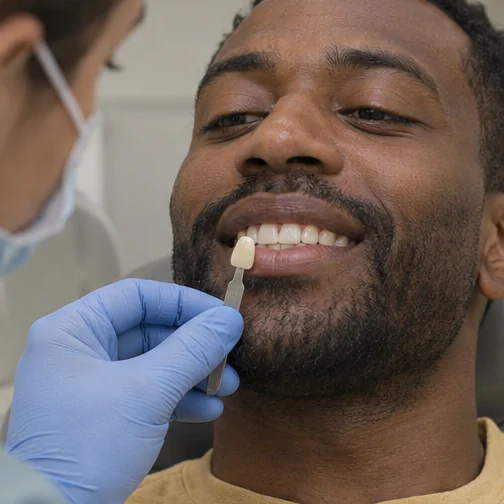
Surface stains or a change in the tooth itself?
Coffee, tea and tobacco can leave surface stains that a professional clean may remove. Whitening changes the shade of natural teeth. If just one tooth has gone darker, especially after a knock, the first step is to find out why.
When might a professional clean be enough?
Two brown marks can have different causes. Some stains sit on the surface and can be removed during a clean. Others come from within the tooth or involve an old filling. Explain when you noticed the change, whether it affects one tooth or several, and any products you have tried. Once a surface stain is removed you can see the actual shade before deciding about whitening.
Does whitening toothpaste work like gel?
Toothpaste that polishes the surface may reduce some external staining. That is different from bleaching the tooth itself. If one tooth has had a mark for a long time, pressing harder with a brush can irritate the gum without telling you why the mark is there. Show the dentist the precise area that concerns you.
Will a front filling change colour too?
Whitening gel will not lighten fillings, veneers or crowns. A filling that blends into a front tooth today might stand out after whitening. Look together at which restorations show when you smile and what shade change you could reasonably expect.
Supervised whitening at home or in the clinic
Professional whitening can involve an in-clinic application or custom trays with instructions for home use. The practical differences are who applies the gel, how long it stays in contact with the teeth and when the result is checked. Mention any existing sensitivity to cold. Adding extra gel or leaving it on longer on your own can irritate the gums.
What might you notice during treatment?
We check for decay, cracks and inflamed gums before you start. If whitening is suitable, we will explain how to use the product and for how long. Teeth can become sensitive to cold, and gums can feel sore. If that happens, tell us before the next application so we can decide whether to pause or adjust it. The final shade varies and can change again over time.
If you also plan to replace a filling
Discuss the order of treatment before starting. A new restoration is made in a shade that matches the neighbouring teeth, so it may be sensible to assess the colour after whitening. A starting photo taken in comparable light can help you judge the change. If you are also concerned about the shape of a front edge, our veneer guide explains what to consider at a try-in.