
Hygiene and prevention
Even with careful brushing, some spots are hard to reach. If food always catches in the same place or you see blood on your toothbrush, show us where it happens.
What happens at a hygiene visit

Point out difficult spots
Show the hygienist where food gets stuck or where your gums bleed when you brush. You can look at those areas together.
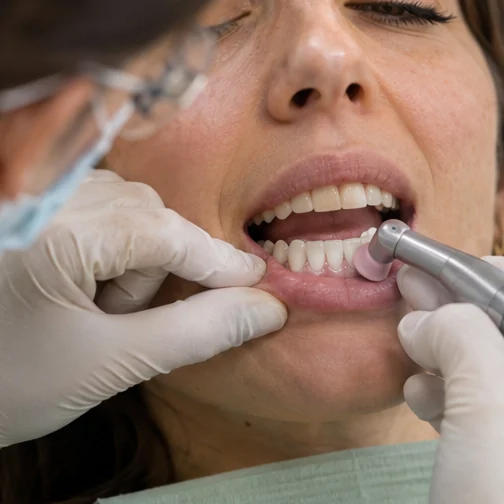
Have your teeth cleaned
The hygienist removes tartar that has built up along your gum line. Tell them if any of your teeth are sensitive so they can take extra care there.
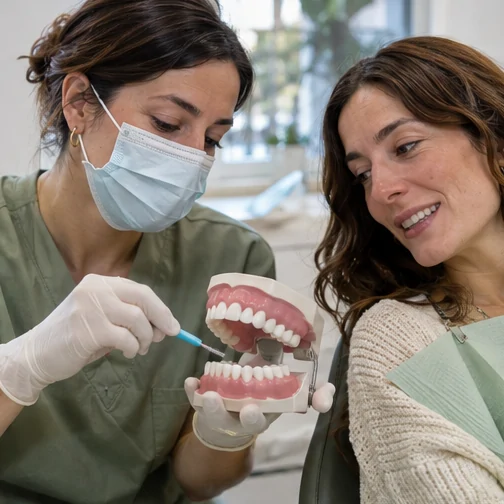
Try an interdental brush
We’ll show you how to slide the small brush between two teeth on a model. You can then try it yourself and ask about any spots you find hard to reach.
What do you notice when you brush?
Is there a spot you avoid because it feels tender? We can look at it together. Plaque is a soft film you can brush away. Once it hardens into tartar, it needs to be removed at the practice.
What your gums need
Two people with much the same amount of tartar may need different care. If your gums keep bleeding, we check whether the inflammation also affects the tissues holding your teeth in place.
During the clean
During your clean, we’ll remove tartar from your teeth. If anything feels uncomfortable, tell us and we’ll pause. Afterwards, we’ll help you choose the right size of interdental brush and show you how to use it at home.
Once you’re home
We’ll agree when to see you again. If one area keeps bleeding, point it out at your review so we can take a closer look.
Questions you might want to ask
Will a clean lighten my teeth?
Cleaning can remove some external coffee or tea stains. Your teeth keep their underlying shade. If you want to change that shade, you can discuss whitening after a check of your teeth and gums.
What will my estimate cover?
We’ll go through what the check-up and clean cover and tell you whether any other tests are needed.