
Tooth decay and fillings
Perhaps you’ve noticed a mark on a tooth or a twinge when you drink cold water. We’ll look at it with you and explain whether to keep an eye on it, protect it or repair it with a filling.
What happens when a tooth needs a filling
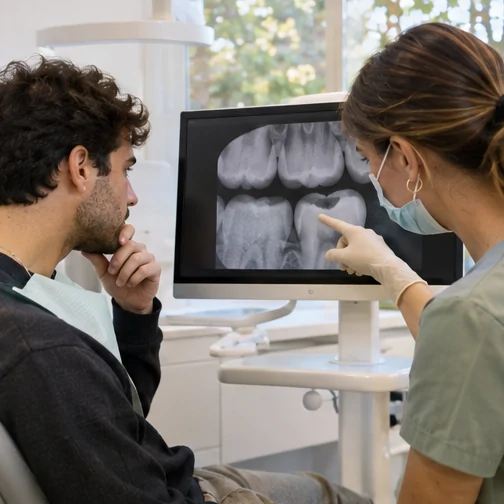
Find the decay
The dentist examines the tooth and may show you an X-ray to explain how far the decay goes and discuss your options.
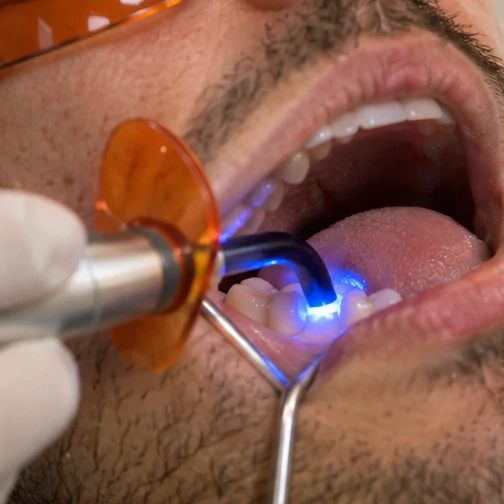
Rebuild the tooth
That blue light hardens the resin. Before we use it, we remove the damaged area and shape the filling to fit your tooth.

Check your bite
Biting on a thin strip of paper leaves marks where the teeth meet. These help the dentist decide whether the filling needs adjusting.
How far does the decay go?
Decay can start before you can see a hole, and it doesn’t always hurt. We check whether the enamel is still intact. If an X-ray would help, we’ll show you what we’re looking for.
When a filling helps
If the enamel is intact, fluoride and careful cleaning may help stop early decay progressing. If part of the tooth is already missing, a filling can rebuild the surface you chew on.
Rebuilding the tooth
We remove the damaged tissue and shape the filling. If the decay was between two teeth, we also check where they touch. When you close your mouth, tell us if anything feels different.
If your bite feels different
Does the filled tooth touch first, or does food catch beside it? Let us know if that happens or if sensitivity persists. Knowing exactly when you feel it helps us check the fit.
Questions you might want to ask
Does a filling stop decay from coming back?
It replaces the part that was lost. Tooth tissue around the filling can still collect plaque, so being able to clean the edge and check it over time matters.
What will my estimate cover?
The number of teeth, the size of the decay and the surfaces we need to rebuild all matter. We can show you which ones on your own teeth.