
Dental veneers
In the mirror, there may be one detail you’d change and others you’d like to keep exactly as they are. Show us both. It helps us discuss shape and shade with your own smile in mind.
Choosing the shape of a veneer
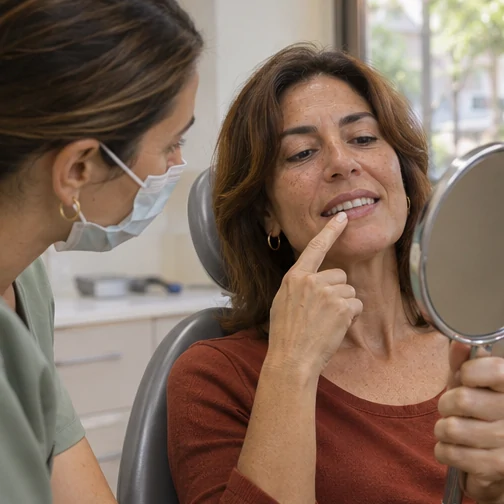
Point out what you would change
With a mirror you can show the edge, shape or shade that concerns you. The dentist talks through your options with you.
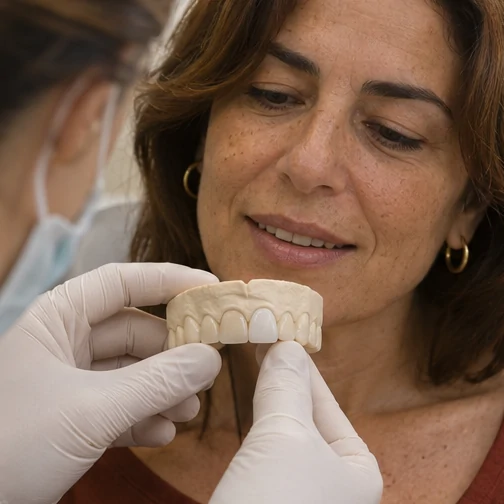
Explore the proposed shape
A model lets you discuss length and contours before the veneer is made. You can point out what you would keep or change.
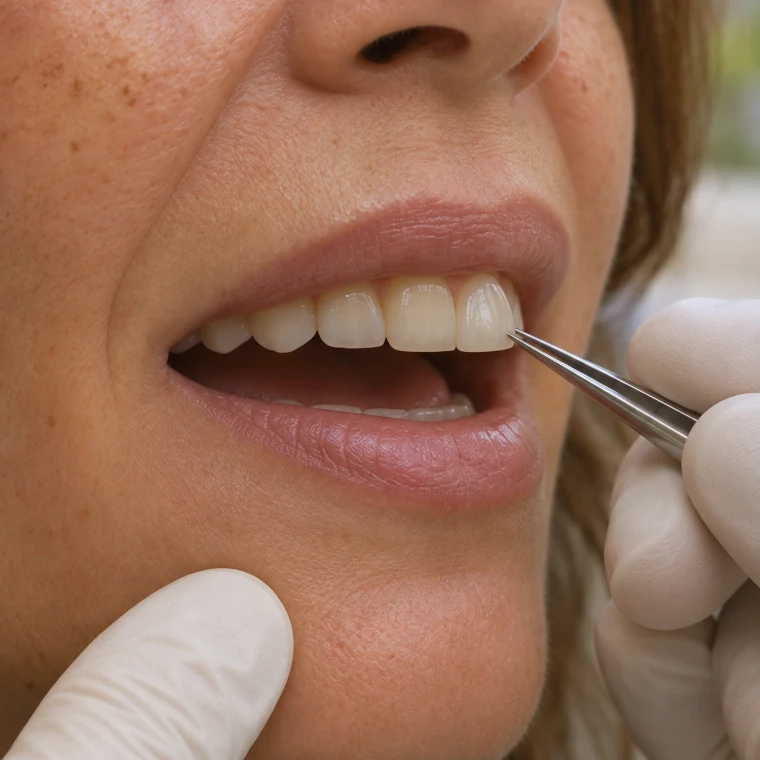
Try it before bonding
Notice where the veneer ends beside the neighbouring front tooth. Before bonding it, we’ll ask how you feel about the length and check its shade and fit.
What catches your eye?
It might be the edge of a front tooth, a space or a worn corner. We check the enamel and your bite to understand whether it’s the tooth’s shape, position or wear that’s bothering you.
How much enamel would need preparing?
A small chip can sometimes be rebuilt with resin. Orthodontics or whitening may suit a change in position or colour. If we discuss a veneer, we’ll explain how much enamel would need preparing. Removed enamel doesn’t grow back.
Trying the shape first
Where possible, a try-in gives you a chance to comment on length, thickness and shade. We also check how it feels when you speak and how the teeth meet when you bite.
Looking after a veneer
We check the edges, gum and bite at reviews. If you clench your teeth, feel a new rubbing spot or notice a chip or movement, get in touch so we can take a look.
Questions you might want to ask
How does a veneer differ from a crown?
A veneer mainly covers the front surface. A crown goes around the visible portion and can protect a more weakened tooth. Sound tissue and the function to be restored guide the choice.
What will my estimate cover?
We’ll look at the number of teeth you want to treat, the material and how each tooth would need preparing. We can go through those items together in the estimate.