
Gum care and periodontics
Blood on your toothbrush can be worrying, especially if your gums don’t hurt. You can come in and show us where it happens so we can work out what that area needs.
From a gum assessment to follow-up care
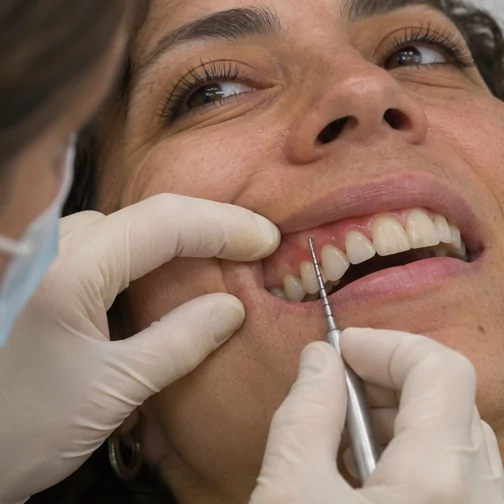
Measure around the tooth
A slim probe measures the space between tooth and gum. The measurements are recorded for comparison at later visits.
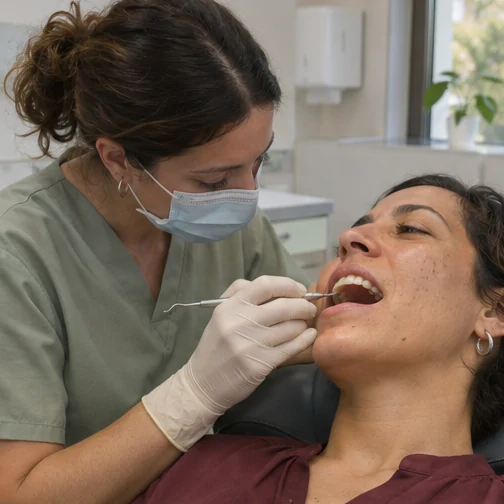
Clean below the gum line
If tartar has formed on a root, we’ll clean that area below the gum line. Before we start, we’ll explain which teeth we’ll be treating at this visit.
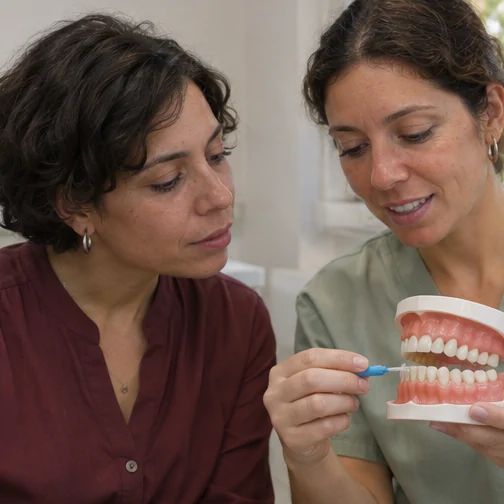
Practise and review
We’ll use a model to show you how to clean between your teeth. At your next visit, we’ll measure the spaces between your teeth and gums again to see how they’ve healed.
What bleeding can tell us
Inflammation can affect the gum alone or the tissues that hold the tooth in place. We measure the space around each tooth with a fine probe and use an X-ray to look at the supporting bone if needed.
The right clean for your gums
Sometimes a professional clean and help with brushing a hard-to-reach area are enough. If there’s tartar on a root, we’ll show you where we need to clean below the gum line.
How we know it’s improving
We may work on one area at a time. Once the gums have had time to heal, we take the measurements again and show you what has improved and what still needs attention.
The awkward spots
It might be hard to reach behind a molar or around a bridge. Show us how you do it at home and we can try a different approach together. We also take factors such as smoking and diabetes into account when planning reviews.
Questions you might want to ask
If the bleeding stops, is treatment complete?
That is an encouraging sign. Measurements around the teeth and changes in their supporting tissues also guide the timing of your next review.
What will my estimate cover?
After examining your gums, we can show you which areas need treatment and what maintenance visits to plan for.