
Can I have orthodontic treatment after 40 if I have crowns or implants?
Age and a crown needn't rule out orthodontic treatment. The starting point is to identify which teeth have natural roots, where implants are fixed and what you hope to achieve.
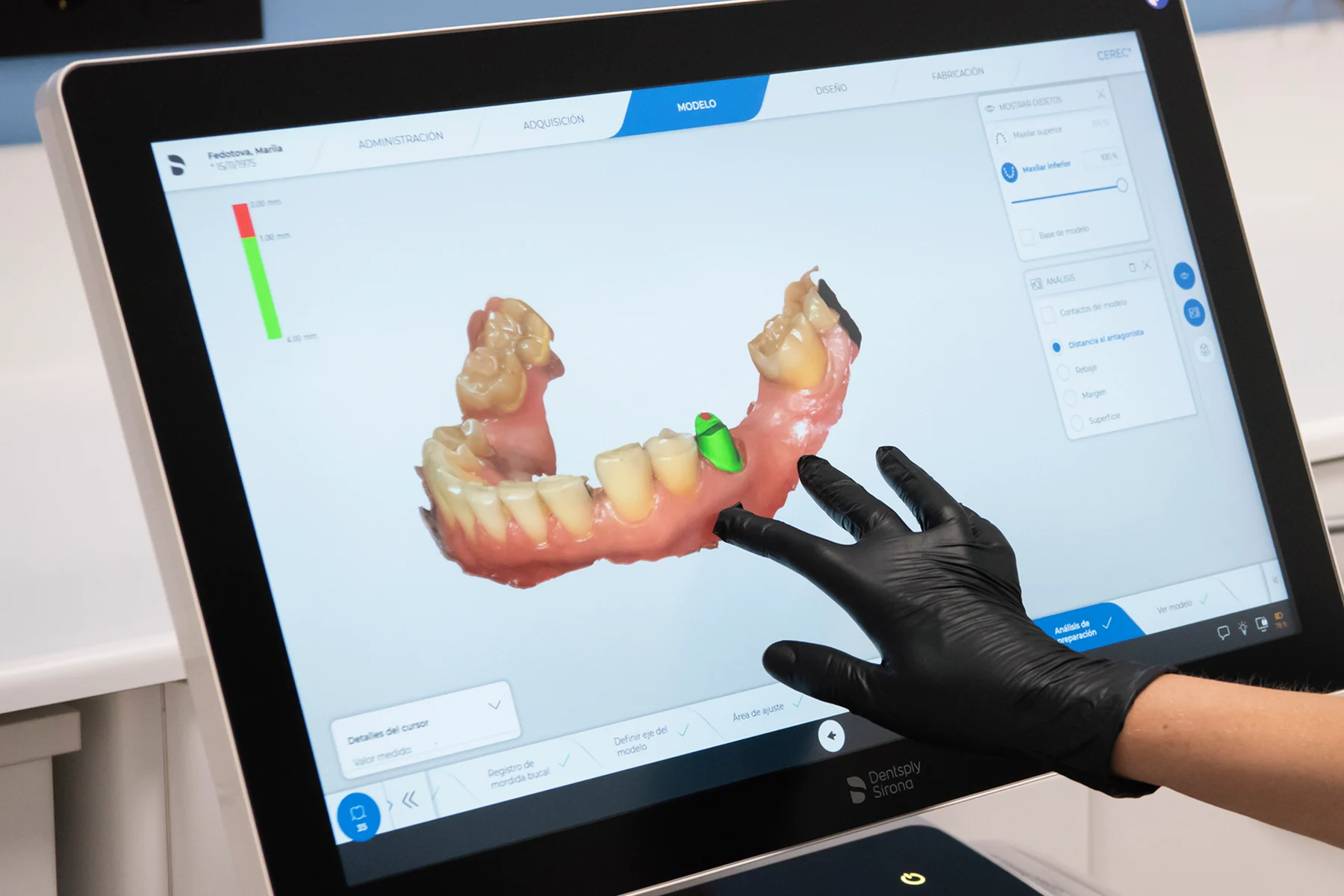
Two crowns that look alike can behave differently
A crown fitted over a natural tooth sits on a root with a ligament around it. If the tooth and its supporting tissues are healthy, orthodontic movement may be possible. An implant is integrated into bone and stays where it is. We plan how neighbouring teeth can move around that fixed point and how they will meet when you bite.
Why the gums come first
We examine the support around the teeth, the crown margins and areas you find hard to clean. Active gum disease needs attention before tooth movement. A fixed bridge also affects planning because it joins teeth together. You don't need to know the technical name of the work you've had.
Choosing a goal and the right order
Making space to clean overlapping incisors is different from opening a space for a future crown. We discuss whether braces or aligners could achieve your goal without disturbing your bite. If a restoration will need replacing, planning the order can spare you having a new crown made twice.
If an implant is still to come
If you need a missing tooth replaced and want straighter teeth too, bring up both goals before the implant is placed. Sometimes space needs to be opened first. Planning both together helps ensure the final crown has enough room.
Preparing for your visit
Bring implant records if you have them. If you don't, you can still come for an assessment. Tell us which change matters most to you. At Art Dent we can explain what can move, what the implants limit and how you would look after the result. Mention your crowns or implants when booking so the visit starts with your situation.
Sources