
My child bites with the lower teeth in front. Should we wait for the adult teeth?
If one or more lower teeth sit in front of the upper teeth when your child closes their mouth, you can ask for advice while they are still growing. An early assessment may lead to a planned review rather than immediate treatment.
What to look for at home
Watch your child close their mouth naturally after a meal. One upper front tooth may sit behind a lower one, the back teeth on one side may meet the opposite way round, or the chin may shift sideways. There's no need to push their jaw back or ask them to repeat the movement. Just note where you see it and for how long.
Why the timing varies
A crossbite can come from the position of an emerging tooth, the width of the upper jaw or the way the jaws grow. Sometimes a first point of contact makes a child slide the lower jaw to bring their back teeth together. These can look similar in a photograph but call for different decisions.
What the first visit involves
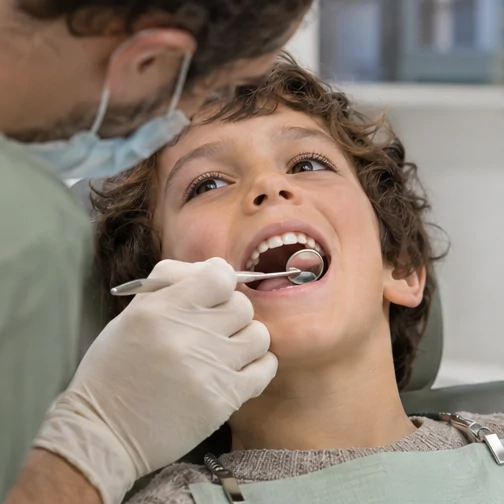
We watch your child open and close, examine which teeth have come through, and check for limited space, gum irritation or rubbing. Tell us if they always chew on one side. If an X-ray or bite record is needed, we explain what it would help us find out.
Preparing your child
Tell them we'll count the teeth that have come through and watch how they meet. There is nothing to practise. If you already have a picture showing the change, bring it. A description from an ordinary mealtime is more useful than trying to remember a technical term.
Watching or intervening early
A newly erupting tooth causing no damage may be suitable for monitoring. A bite that locks, shifts the jaw or wears a tooth may benefit from earlier treatment. When you contact Art Dent, tell us your child's age and whether the change is at the front or the side. We can help you choose a sensible time for an assessment.
Sources